




In litigation, the courtroom may be the stage—but discovery in litigation is where the script is written. It’s the pre-trial process that determines what evidence each side holds, where the facts lead, and how arguments are ultimately shaped. Done right, discovery builds a strong case. Done poorly, it opens the door to delays, sanctions, and sometimes even defeat.
While discovery principles are rooted in fairness and transparency, real-world processes are often far more chaotic. Between vast data sets, evasive opposing counsel, and tight court deadlines, discovery has evolved into one of the most challenging aspects of modern litigation.
Let’s explore what makes discovery in law so complex, how legal teams can overcome its pitfalls, and why well-timed support can make all the difference.
What Is Discovery in Litigation—And Why It Matters
At its core, discovery in litigation is the formal exchange of information between parties in a legal dispute. It’s meant to prevent surprises at trial and allow each side to build their case based on all available facts.
Common discovery tools include:
| Method | Purpose |
| Deposition | Sworn, out of court oral testimony used to assess witness credibility and facts |
| Interrogatories | Written questions that must be answered under oath by the opposing party. |
| Requests for Production | Demands for documents, emails, contracts, or other materials. |
| Requests for Admission | Statements a party must admit or deny-helps narrow trial issues. |
| E-Discovery | Review of digital files like emails, chats, and metadata. |
Although these tools are standardized, the complexity of modern discovery is anything but. The rise of cloud storage, collaboration apps, and cross-border communications has multiplied the volume of discoverable information—and the effort needed to manage it.
Case in point: In the 2020 U.S. v. Google antitrust case, discovery involved more than 4.3 million documents. This wasn’t just an operational burden; it became the backbone of strategy. In high-stakes litigation, missing a single document can change the course of a case.
Discovery Challenges—and How to Solve Them
Even with strong processes in place, discovery often faces serious friction. The following challenges show up in nearly every major case—and now, more than ever, they require tech-savvy, well-supported solutions.
1. Data Overload
Litigation today involves more than paper files. Contracts, cloud folders, instant messages, surveillance footage, and app logs all count as discoverable material. Reviewing these without proper tools often leads to missed evidence—or critical delays.
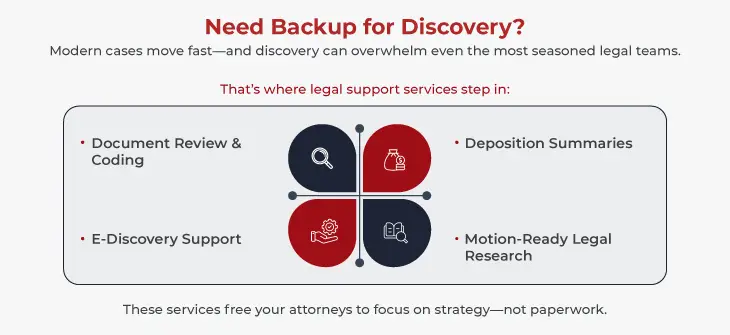
Firms now use AI-powered document review and coding tools to filter relevance, auto-tag privilege, and prioritize high-value content for faster attorney review.
2. Stonewalling by Opposing Counsel
It’s not uncommon for legal teams to drag out the process—delaying responses, withholding critical data, or overusing objections and privilege claims.
Example: In the Purdue Pharma opioid litigation, plaintiffs repeatedly filed motions to compel after the company failed to produce internal communications. The discovery delays became part of the broader scrutiny around the company’s transparency.
Today, automated metadata review and intelligent deposition summaries can quickly highlight patterns and inconsistencies that would otherwise be buried—giving legal teams stronger leverage when escalating disputes.
3. Cost and Time Pressures
Discovery in legal terms demands enormous resources. For mid-sized firms or teams juggling multiple matters, it often means choosing between budget and bandwidth.
With automated e-discovery platforms and cloud-based collaboration, firms reduce time-to-review and avoid duplication of effort—cutting both cost and cognitive fatigue.
4. Procedural Pitfalls
Even experienced teams make small mistakes: missed deadlines, incorrect redactions, or inconsistent privilege logs.
Motion-ready legal research tools and built-in audit trails are helping firms avoid these slip-ups while staying compliant with court expectations.

When Cooperation Fails: The Role of Motions to Compel
Do you know the popular copyright lawsuit Oracle v. Google? Google initially resisted producing key internal emails related to its use of Java APIs in Android. Oracle responded by filing a
Motion to Compel, arguing the documents were essential to understanding how Google made its decisions. The court agreed—and those documents later became central to Oracle’s infringement claims.
The lesson? When one side doesn’t cooperate, discovery doesn’t stall—it escalates.
Motions to Compel are the legal system’s response when cooperation breaks down.
They’re filed when one party ignores, dodges, or refuses to comply with discovery obligations—and informal attempts to resolve the issue have failed.
What Triggers a Motion to Compel?
- Non-responses: No reply to interrogatories or document requests
- Evasive objections: Using vague or boilerplate answers to delay
- Refusals without cause: Failing to produce specific evidence despite relevance
Courts typically expect both parties to engage in a “meet and confer” process first—an effort to resolve the disagreement without involving the judge. But when delay tactics persist, motions become necessary to restore balance and maintain progress.
What Filing a motion for Discovery Looks Like in Practice
| Step | Approx. Timeline |
| Serve discovery | Day 1 |
| Await response | Day 30 (jurisdiction-dependent) |
| Attempt resolution (“meet and confer”) | Day 35 |
| File motion | Day 45 |
| Hearing + ruling | Day 60-75 |
Used wisely, a Motion to Compel isn’t just procedural—it’s strategic leverage. It signals to the court that your team is proactive, reasonable, and fully in command of the case.
Discovery Disputes in Action: Common Conflicts & Strategic Responses
Even when teams are well-prepared, discovery disputes still arise—often unexpectedly. The best defense is knowing how to respond quickly and strategically.
| Issue | Potential Violation | Strategic Response |
| Ignored interrogatories | Non-compliance | File a Motion to Compel |
| Incomplete document production | Withholding key facts or evidence | Request a privilege log; escalate if necessary |
| Obstructive deposition behavior | Evasion or refusal to answer | Motion to Compel Deposition Testimony |
| Overbroad discovery requests | Excessive or irrelevant demands | Motion for Protective Order |
| Privileged information disputes | Improper redactions or claims | Request in-camera review by the court |
Final Thought: Discovery Is Where the Case Begins
Discovery in law isn’t just a legal formality—it’s where litigation is won or lost. It’s where the facts emerge, the narrative begins, and the real work of advocacy takes shape.
Whether you’re reviewing digital evidence, managing document production, or responding to discovery disputes, your team needs to move fast—and move smart.
Discovery is too critical to leave to chance.
Talk to us about how Legal Support World can help your team with litigation support services to stay sharp, compliant, and ahead of deadlines.
