


A contract can be signed in minutes and still create obligations that last for years. Renewal dates, notice periods, payment terms, service obligations, compliance requirements, and other provisions continue to matter long after the agreement has been executed. When that information is scattered across documents, email threads, spreadsheets, and repositories, the challenge is no longer storing contracts. It is maintaining visibility into what those contracts require.
This is where end to end contract lifecycle management services provide value. These services integrate the activities that shape a contract before execution. It also helps to draft and review the terms. Ongoing management keeps that information current and actionable throughout the contract lifecycle.
This article examines the four core components of full-cycle CLM: contract drafting services, contract review services, contract abstraction services, and contract management services.
What Does End to End Contract Lifecycle Management Actually Mean?
A contract lifecycle extends well beyond the point at which an agreement is signed. It begins with creating and reviewing the document and continues through the organization’s ongoing responsibility to understand, retrieve, monitor, and manage its contractual obligations.
End to end CLM connects these stages rather than treating each one as an isolated function.
Consider what happens when the stages are disconnected. A contract may be carefully reviewed, but key provisions may never be captured in a structured format. A portfolio may contain thousands of agreements, but renewal dates and obligations may remain difficult to track. A contract repository may provide access to documents without giving teams an efficient way to identify what requires attention.
What Are the Core Components of End to End Contract Lifecycle Management?
A full-cycle contract lifecycle management process connects the key activities involved in creating, reviewing, organizing, and overseeing contracts. Each stage serves a distinct purpose, while the information captured at one stage supports the next.
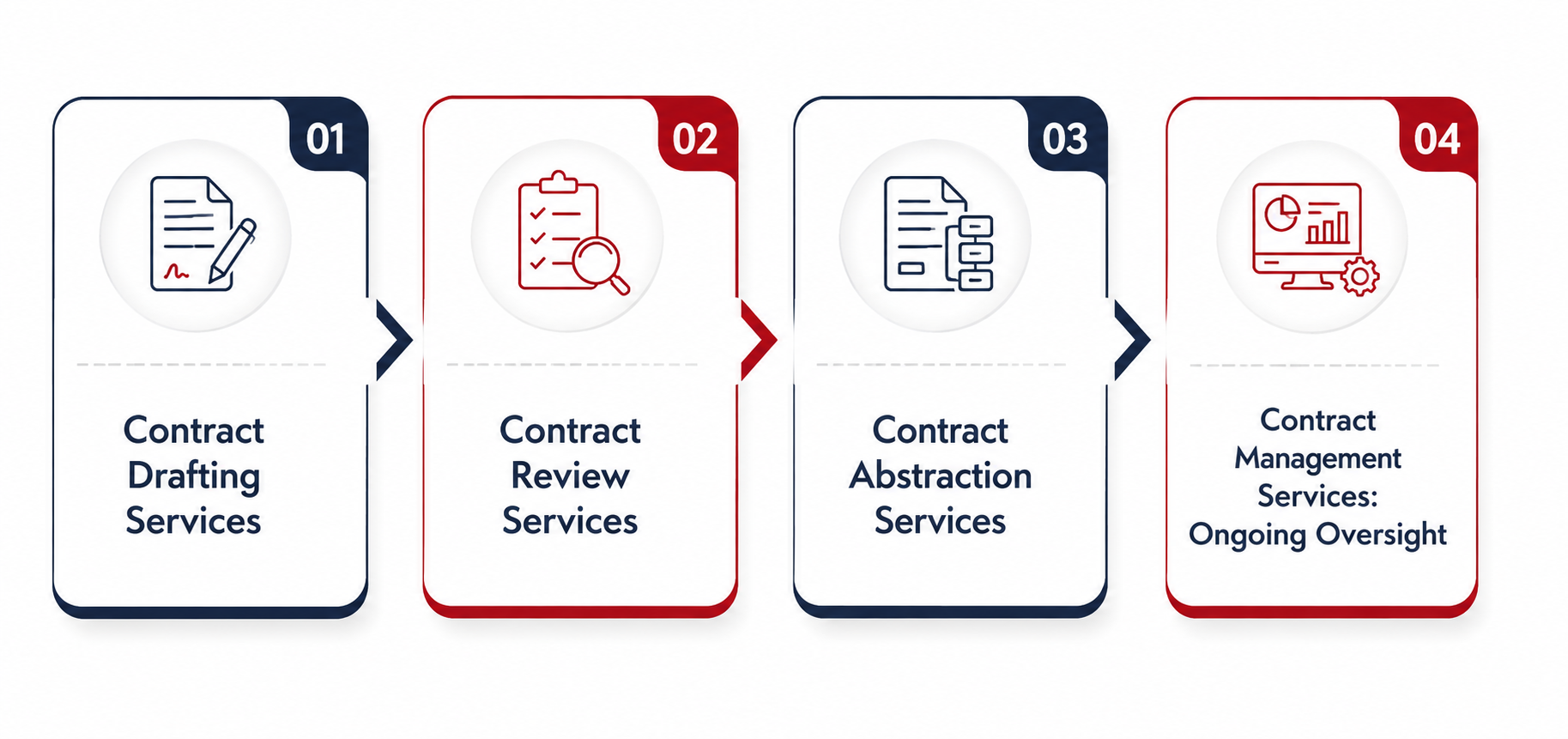
1. Contract Drafting Services
The quality of contract management begins with the quality of the contract itself. Poorly structured language or inconsistent provisions can create issues later in the contract lifecycle.
Contract drafting services support the creation of clear, structured agreements based on the requirements of the matter. This can include preparing contracts from established templates, incorporating required clauses, adapting agreements, and maintaining consistency across a contract portfolio.
A structured drafting process helps firms maintain greater control over contract language while allowing agreements to be adapted to specific requirements.
2. Contract Review Services
Drafting establishes the terms, while review examines whether those terms accurately reflect the organization’s legal and commercial interests.
Contract review services involve examining agreements for relevant provisions, inconsistencies, obligations, compliance considerations, and areas requiring attention.
For firms managing large contract volumes, a structured review process promotes consistency and ensures important information is identified and captured for subsequent CLM activities like contract governance, Contract administration.
3. Contract Abstraction Services
Important contractual information can remain difficult to access when it is embedded within individual documents.
Contract abstraction services extract key information—such as parties, obligations, dates, renewal provisions, and other relevant terms—and convert it into a structured format.
This gives legal and business teams greater visibility across the contract portfolio while providing information that can support ongoing tracking, monitoring, and Contract compliance review.
4. Contract Management Services: Ongoing Oversight
The final component keeps CLM active after contracts have been drafted, reviewed, and abstracted.
Contract management services provide ongoing oversight through centralized records and structured tracking. This can include renewal date monitoring and alerts, completeness checks, identifying missing contracts, Contract compliance review, and contract spend evaluation.
This ongoing oversight allows the information captured earlier in the lifecycle to remain useful and actionable, helping firms maintain visibility over contracts that require attention.
Who Can Benefit from End to End Contract Management Services?
- Legal teams
- Procurement
- Sales
- Healthcare
- Financial services
- SaaS companies
- Manufacturing
Why Firms Need CLM as One Connected Process
Managing drafting, review, abstraction, and ongoing management as separate activities can create gaps. Important provisions may not be captured consistently, renewal information may be difficult to track, and teams may lack visibility across the contract portfolio.
An integrated approach connects all four functions, allowing information from one stage to support the next. This can improve consistency, reduce information gaps, and give firms greater visibility into their contracts.
For organizations managing substantial contract volumes, having one provider support these connected activities can also help streamline turnaround and maintain continuity throughout the contract lifecycle.
How Legal Support World (LSW) Supports End to End Contract Lifecycle Management Services
Legal Support World brings together legal expertise, structured processes, and technology to support contracts across their lifecycle. Its team includes attorneys from leading Indian law schools, supported by a multi-jurisdictional setup designed to handle diverse contract requirements.
LSW supports the key stages of full-cycle CLM, including contract drafting, contract review, contract abstraction, and ongoing contract management. Its database-driven approach helps organize contract information while renewal tracking and alerts help teams stay aware of important dates and obligations.
LSW also supports leading CLM platforms, including DocuSign, Ironclad, Icertis, Link Squares, and Coupa, allowing contract information and workflows to fit within the technology environment already used by the organization.
For firms looking to bring greater structure and continuity to contract management, LSW can provide support across the lifecycle rather than treating each activity as a separate requirement.
People Also Ask
- Why Is Contract Abstraction Important in CLM?
Contract abstraction converts important information from individual agreements into a structured format. This makes key terms, dates, obligations, and other relevant information easier to access and use for ongoing contract tracking and management.
- What Industries Use Contract Review and Management Services?
Contract review and management services can support organizations that manage significant volumes of agreements or have ongoing legal, compliance, and contractual obligations. The specific requirements vary based on the organization, its contracts, and the nature of its operations.
Conclusion
Effective CLM extends beyond drafting a contract or storing a signed agreement. Drafting, review, abstraction, and ongoing management work best when they function as one connected process.
With the right structure and support, firms can improve visibility across their contract portfolios and maintain better oversight throughout the contract lifecycle.
Explore LSW’s contract lifecycle management services to see how full-cycle contract support can fit your organization.
