



A supplier contract renews automatically at outdated pricing. A customer agreement expires unnoticed. An NDA sits buried in someone’s inbox until the day a dispute lands on the general counsel’s desk. These aren’t rare accidents; they’re the everyday reality of scattered and manual contract oversight. This is what costs businesses far more than most finance leaders realize.
Poor contract management quietly drives up four kinds of exposure: missed deadlines, revenue leakage, compliance failures, and damaged relationships with customers and vendors. Over time, these small oversights compound into disputes, lost negotiating leverage, and regulatory penalties that could have been avoided.
Modern contract management services help businesses centralize contracts, automate deadline tracking, strengthen compliance, and reduce the costly downstream risks that come with letting agreements manage themselves.
Key Takeaways
- Poor contract management can drain up to 9.2% of annual revenue through missed deadlines and untracked obligations.
- Centralized contract management services replace fragile spreadsheets and shared drives with a single source of truth.
- AI-assisted abstraction and monitoring reduce human error and free legal teams for higher-value work.
- Proactive contract oversight prevents disputes, penalties, and forgotten renewals before they hit the books.
What Are Contract Management Services?
Contract management services cover the full post-signature lifecycle of an agreement, from intake and abstraction through storage, monitoring, and renewal. It actually means a centralized repository, extracted key terms and metadata, automated deadline and obligation tracking, compliance monitoring, and reporting that gives business owners real visibility into what they’ve signed. Outsourced or managed services combine trained contract analysts with technology, so companies get consistent oversight without building a large in-house team.
The Hidden Cost of Poor Contract Oversight
The financial impact is bigger than it looks. A study estimated that ineffective agreement management destroys roughly $2 trillion in global economic value each year.
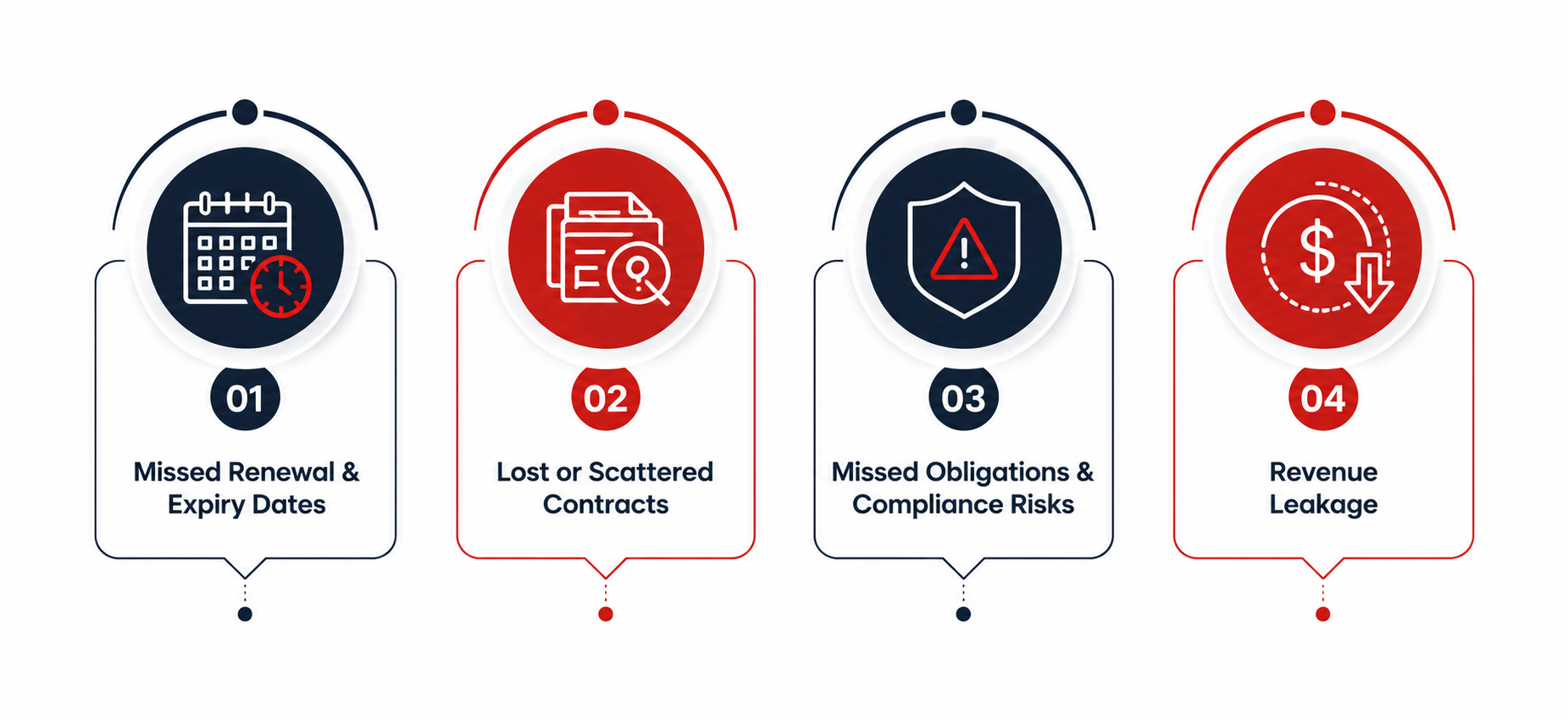

1. Missed Renewal & Expiry Dates
When notice periods pass unnoticed, agreements auto-renew at yesterday’s pricing or expire while service continues without a valid contract. Either way, the business loses its leverage to renegotiate.
2. Lost or Scattered Contracts
According to the 2026 contract management report, 71% of businesses cannot locate at least 10% of their contracts. Missing agreements delay renewals, block audit responses, and slow deal closure when someone needs to verify a clause.
3. Missed Obligations & Compliance Risks
Untracked obligations like insurance certificates, data protection commitments, and reporting duties invite regulatory penalties and turn routine audits into fire drills.
4. Revenue Leakage
Missed billing milestones, forgotten volume rebates, price escalations that never trigger, and payment disputes all quietly erode margin. According to Havard Business Review, a business loses approx. 5-20% due to inefficient contracting.
Why These Problems Keep Happening
None of this is because teams don’t care. It’s because the systems around them can’t scale. Contracts sit across shared drives, email threads, procurement portals, and personal desktop that leads to:
- Renewals get tracked in spreadsheets that no one really owns after the person who built them leaves.
- Reminders are set manually or not at all.
- Ownership is fuzzy: legal thinks procurement is watching; procurement thinks legal is.
- Volumes keep climbing, especially with SaaS and vendor sprawl.
Gartner reports that nearly 40% of SaaS spending goes entirely unmonitored by finance or IT. The pattern is process-related, not people-related. Better people don’t fix broken workflows; better workflows do.
How Contract Management Services Solve These Risks
The fix is unglamorous but effective: bring every contract into one place, extract what matters, and monitor it against a calendar and a rulebook.
| Business Risk | How Contract Management Services Address It |
| Lost or scattered contracts | Central repository with contract abstraction and searchable metadata |
| Missed deadlines | Automated renewal, notice, and milestone tracking with escalation |
| Compliance gaps | Obligation monitoring and audit-ready documentation |
| Poor visibility | Reporting dashboards and contract analytics for leadership |
At Legal Support World, contract abstraction turns unstructured agreement of PDFs into structured, searchable data with key terms, obligations, renewal windows, and risk clauses in one place. We ensure deadline tracking and contract monitoring layer alerts and ownership on top of that data, so notice periods surface well before they close, not after. Our renewal management gives procurement and legal a chance to renegotiate rather than accept whatever auto-renews.
For most businesses, the real win isn’t a shinier interface. It’s finally trusting that nothing important is falling through the cracks. When a CFO asks which, contracts renew in the next 90 days, or when auditors ask for evidence of an obligation, the answer arrives in minutes instead of days, and it’s the same answer for everyone in the room.
Given that roughly estimate over 50% of US civil lawsuits involve contract disputes, having a defensible, well-organized contract record isn’t just operational hygiene. It’s litigation risk management.
The Future of Contract Management: AI & Automation
AI is quietly reshaping this work. Contract abstraction that once took analysts hours now happens in minutes, with models pulling out parties, terms, clauses, and obligations at accuracy levels that keep improving.
Clause and risk-identification tools flag unusual indemnities or non-standard liability caps before signature. Smart deadline alerts adapt to escalation rules. Workflow automation routes reviews to the right approvers, and predictive analytics help teams spot vendors trending toward renewal risk.
The result isn’t fewer humans in the loop; it’s humans focused on judgment calls instead of data entry.
Conclusion
Poor contract management doesn’t just create administrative headaches. It compounds into missed revenue, regulatory exposure, and strained business relationships that are hard to repair. With the right contract management services, businesses gain visibility over every agreement, automate the tracking that humans forget, and stay ahead of obligations before they become disputes.
Explore Legal Support World’s Contract Management Services to bring your contracts under one roof and take preventable risk off the table. Contact us today at info@legalsupportworld.com or +1 914-863-9894
